
Elevated interiors aren't always about what you spend. They're about the details you choose.
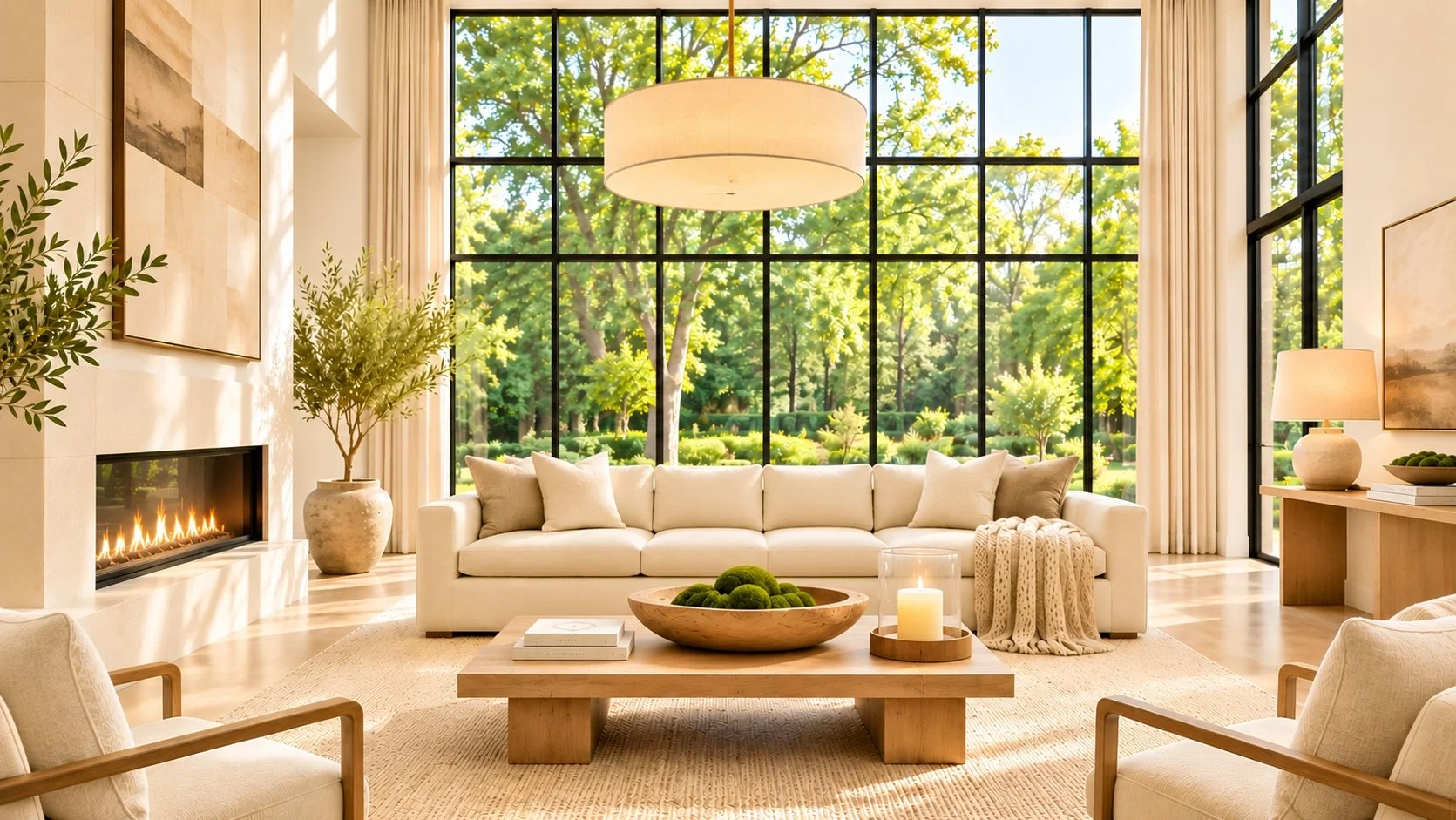
A beautifully designed home has a certain presence. The rooms feel balanced, the furnishings look intentional, and the finishes work together effortlessly.
What often separates an ordinary room from one that feels sophisticated isn't the price of the furniture or the size of the home. It's the attention given to proportion, texture, lighting, and the finishing details.
At JW Home + Design, we believe creating a more elevated home begins with understanding how these elements work together. Whether you're refreshing a room, preparing a property for sale, or simply looking to make your home feel more refined, these seven designer details can make a remarkable difference.
1. Lighting That Transforms a Room
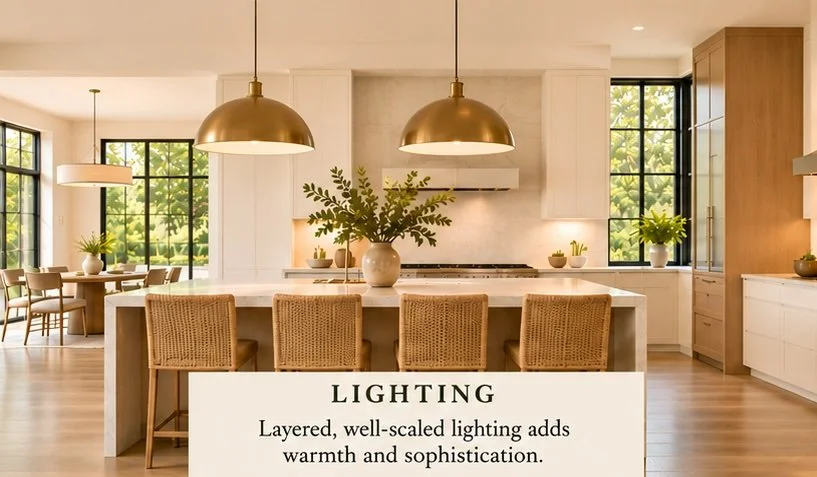
Lighting is one of the most influential elements in interior design, yet it's often treated as an afterthought.
A well-chosen chandelier, an oversized pendant, or a pair of beautiful table lamps can completely change how a room feels.
The key is to think beyond basic illumination. Layer ambient, task, and accent lighting to create warmth and dimension.
Consider the scale of each fixture in relation to the room. A pendant that's too small can feel insignificant, while one with the right proportions becomes an architectural feature.
Designer Detail: Incorporate dimmers and warm, consistent light temperatures throughout your home. Lighting should enhance the atmosphere, not overpower it.
2. Window Treatments That Elevate a Space
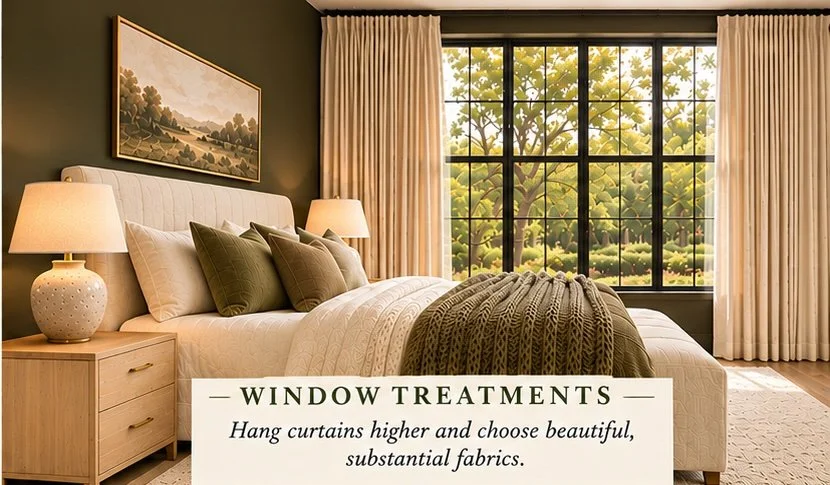
Few details change the perceived proportions of a room as effectively as properly installed window treatments.
Curtains mounted too low can make ceilings appear shorter and windows smaller. Raising the curtain rod closer to the ceiling and allowing panels to fall gracefully toward the floor creates a more expansive, tailored appearance.
Material matters just as much as placement. Linen and linen-look fabrics add softness and texture without feeling overly formal.
Choose panels with enough fullness to look substantial, even when they're open.
Designer Detail: Select curtain hardware with a simple profile and a finish that complements the other metals in the room. Avoid panels that stop awkwardly above the floor.
3. The Power of Texture
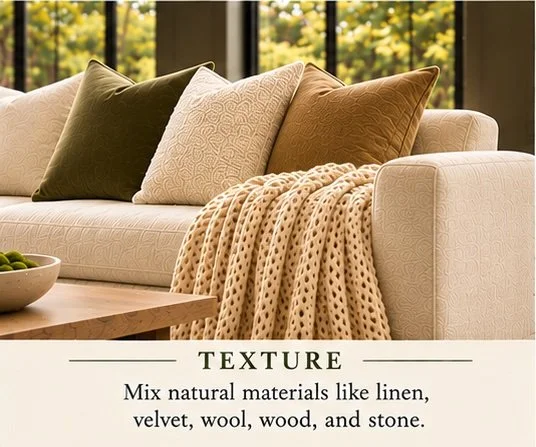
A room designed entirely around one color can still feel rich and layered when the materials are carefully selected.
Think natural wood paired with stone, woven textiles against smooth upholstery, or linen pillows layered over a beautifully tailored sofa.
Texture creates visual interest without requiring additional color or decoration.
It's also what keeps neutral interiors from feeling flat. Rather than filling a room with more objects, introduce materials that contrast subtly with one another.
Designer Detail: Choose a few beautiful natural materials and repeat them throughout the space. This creates continuity while allowing each room to have its own personality.
4. Furniture Scale and Placement
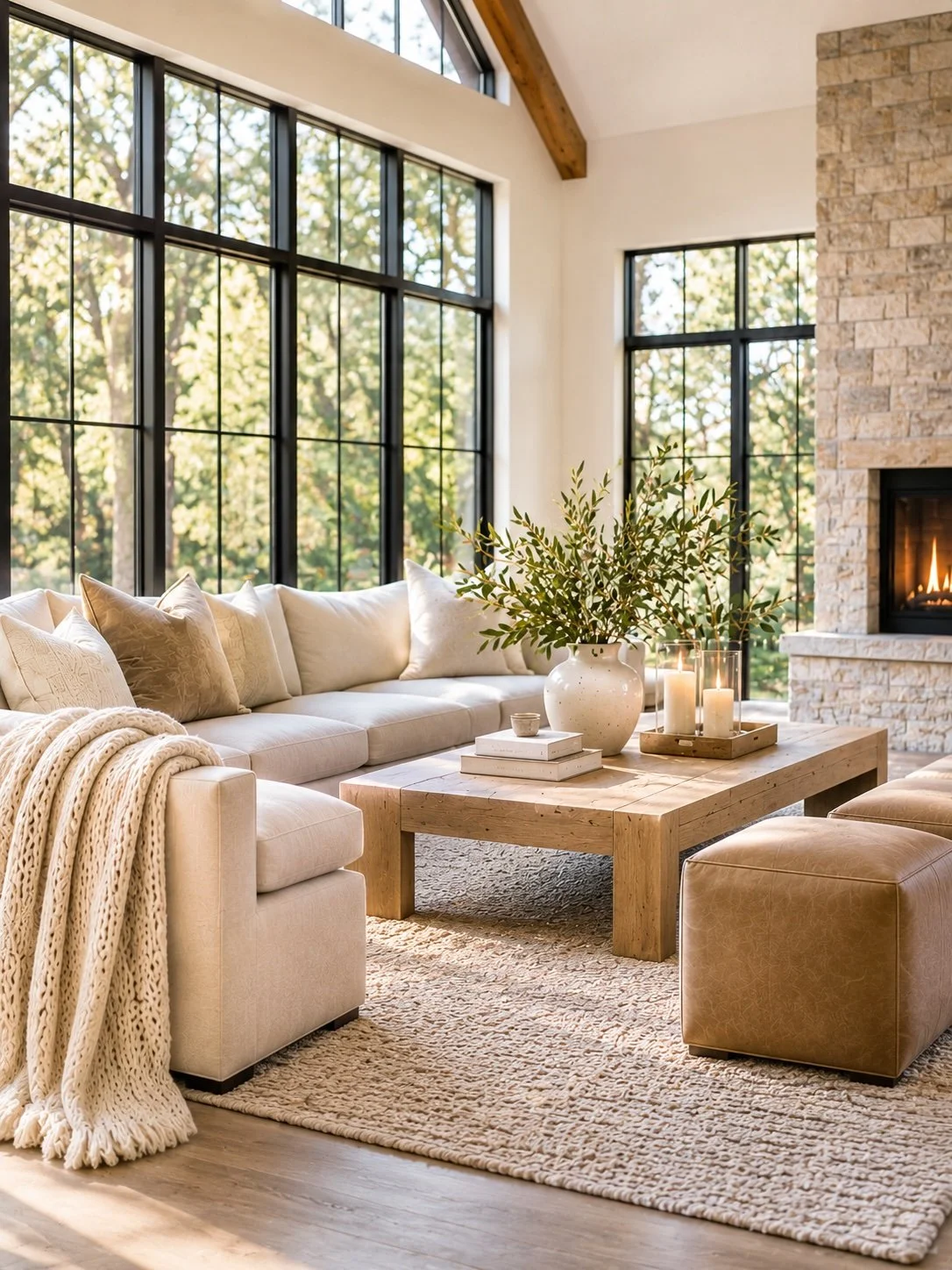
One of the most common design mistakes is choosing furniture based on how it looks individually rather than how it works within a room.
A beautiful sofa can still feel wrong if it's too small for the space. Likewise, an oversized sectional can overwhelm a room and interrupt its natural flow.
Successful furniture placement begins with proportion.
Area rugs should anchor the seating arrangement, coffee tables should relate comfortably to the sofa, and furniture should be arranged to encourage conversation and movement.
A room doesn't necessarily need more furniture. It needs the right furniture, placed well.
Designer Detail: Before purchasing anything, measure the room and map out your furniture arrangement. Scale and spacing often make a greater difference than the cost of the pieces themselves.
5. A Restrained Color Palette
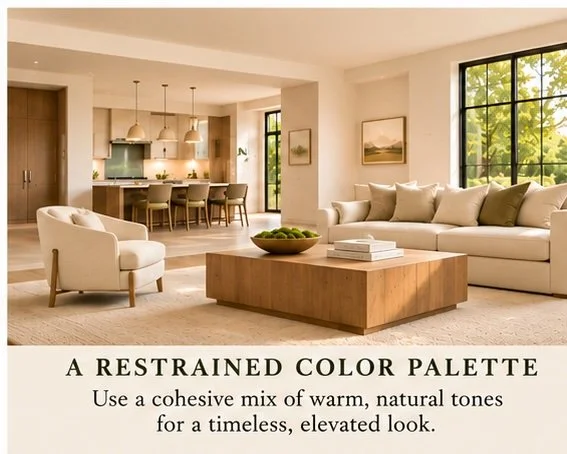
Sophisticated interiors often share one characteristic: a sense of visual continuity.
This doesn't mean every room needs to be beige or white. It means the colors, finishes, and materials should feel connected.
A restrained palette allows architectural features, furnishings, and artwork to stand out without competing for attention.
Warm whites, muted greens, natural woods, soft taupes, and rich charcoal accents can create a timeless foundation.
Repeating complementary colors and materials throughout a home also makes the transition between spaces feel more seamless.
Designer Detail: Pay attention to undertones. Even beautiful colors can look disconnected when their undertones clash.
6. Art and Accessories With Impact
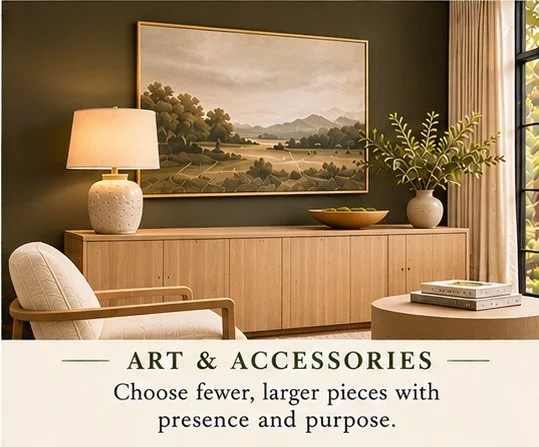
When it comes to styling, more isn't necessarily better.
Too many small accessories can make a room feel cluttered, while a few carefully selected pieces create a stronger visual impression.
Consider one substantial piece of artwork instead of several undersized pieces. A sculptural bowl, a beautiful ceramic vessel, or a stack of oversized design books can add character without overwhelming a surface.
Leave room for negative space. Allow the eye to appreciate individual objects rather than filling every available corner.
Designer Detail: Choose artwork based on scale and its relationship to the furniture beneath it. Proper placement can make even affordable artwork feel gallery-worthy.
7. The Finishing Details
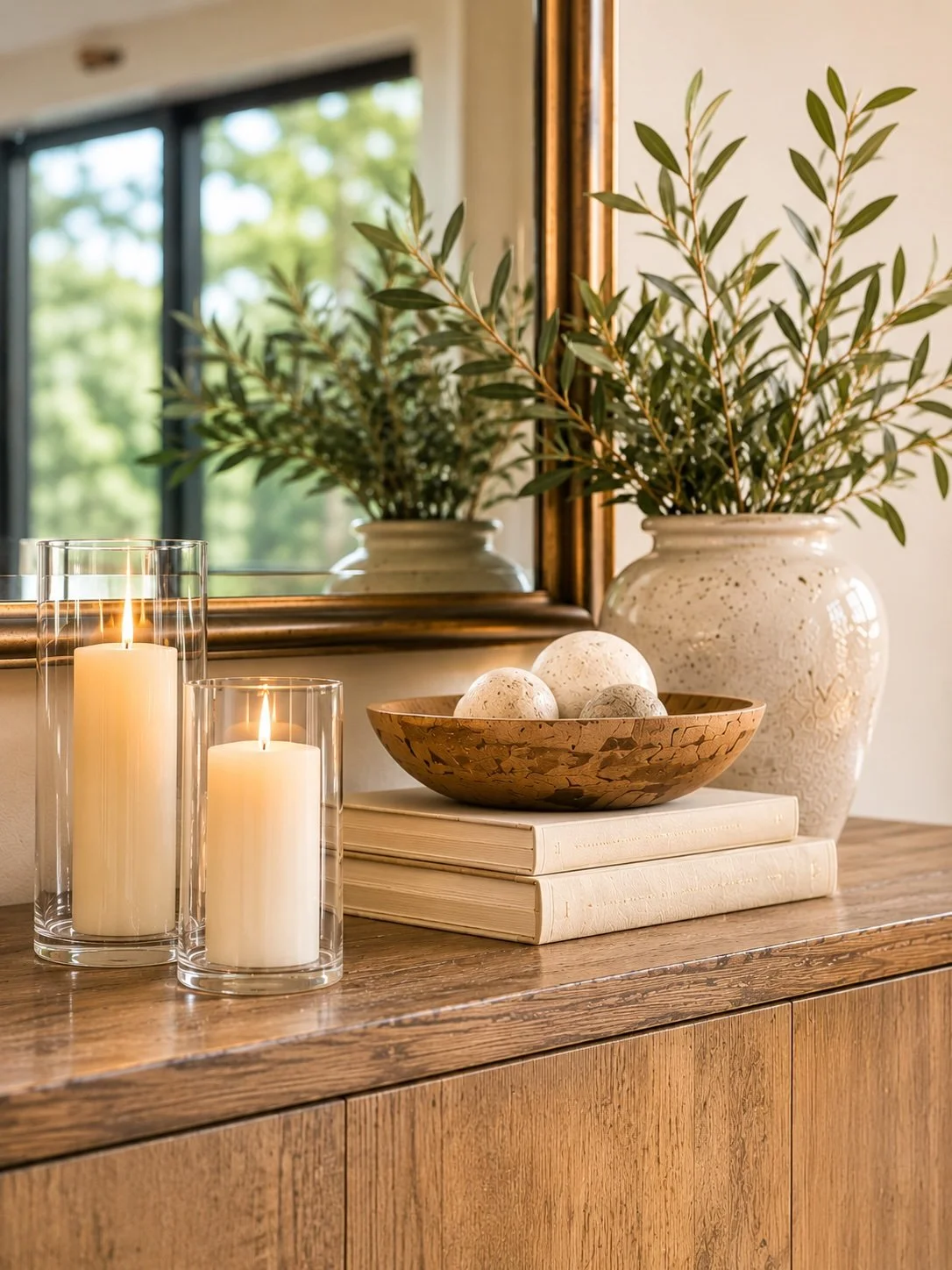
Often, it's the smallest changes that bring an entire room together.
Updated cabinet hardware, beautifully layered pillows, a substantial throw, fresh greenery, or carefully styled shelves can transform the way a space is perceived.
The goal isn't to decorate every surface. It's to create a sense of completion.
Pay attention to the relationship between materials, colors, and shapes. Repeat finishes selectively, vary the height of accessories, and incorporate natural elements to soften the space.
Designer Detail: Edit before adding. Removing unnecessary accessories and allowing your favorite pieces to stand out is often the simplest way to elevate a room.
Beautiful Design Is About the Decisions
Creating a home that looks and feels more expensive doesn't require replacing everything you own.
It requires a clear vision, an understanding of proportion, and an appreciation for the details that give a space its character.
These same principles are particularly valuable when preparing a property for sale. Well-considered design and staging can help buyers appreciate a home's architectural features, understand how rooms function, and connect with the space. Images for illustrative purposes.
At JW Home + Design, we bring together interior design, home styling, staging, and real estate expertise to create spaces that are both beautiful and purposeful.
Whether you're refining the home you love or preparing it for its next chapter, the right details make all the difference.
Explore our Shop the Look collections for inspiration and pieces to help you bring these designer details into your own home.