
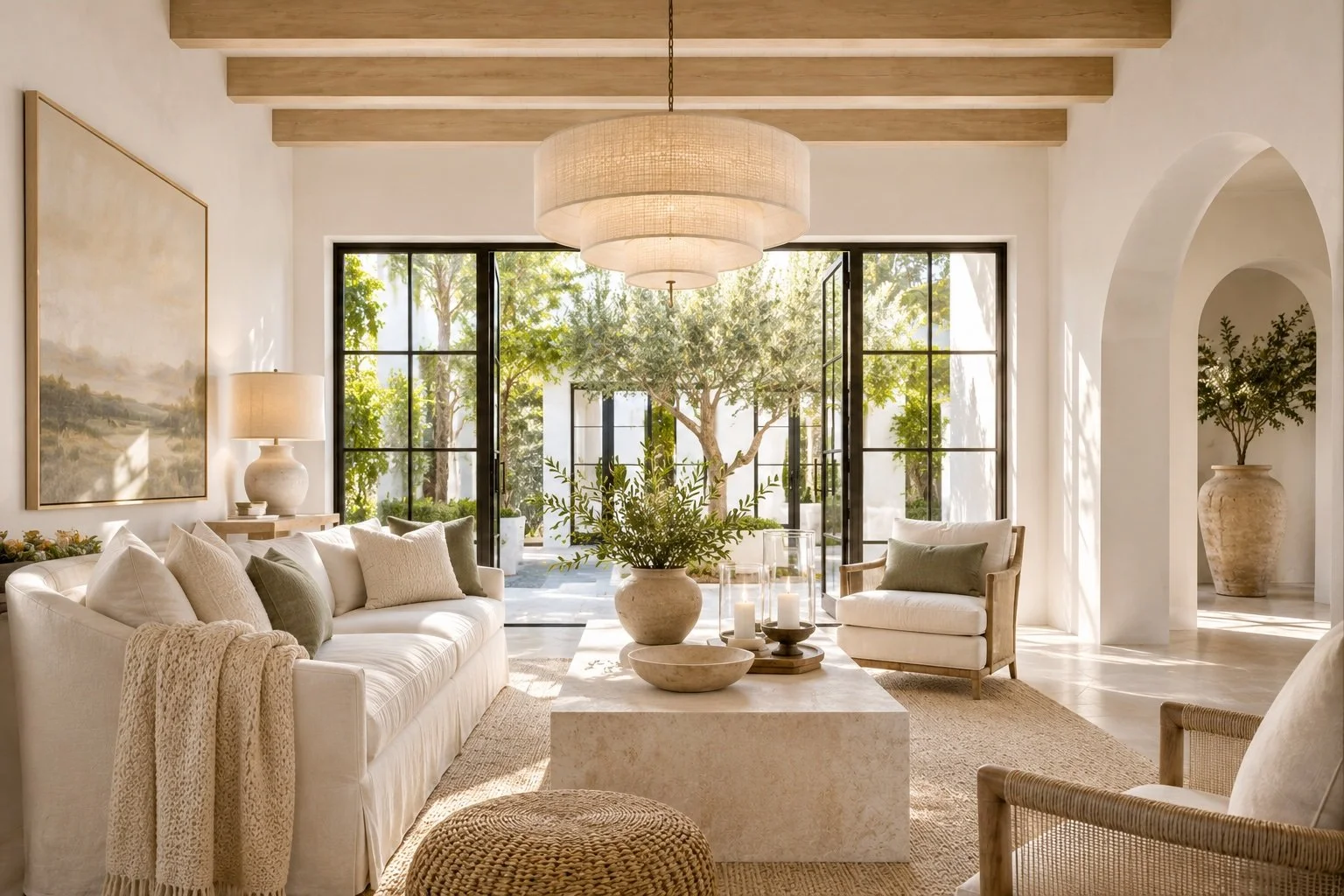
How arches, natural materials, and timeless architectural elements are redefining contemporary design.
Modern design is evolving. After years of clean lines, stark finishes, and minimalist interiors, we're seeing a renewed appreciation for architectural character. Soft curves, natural textures, handcrafted materials, and details inspired by centuries-old architecture are finding their place in today's homes.
From the whitewashed courtyards of Alys Beach to the relaxed elegance of California coastal interiors, these influences are creating spaces that feel sophisticated, welcoming, and distinctly modern.
The beauty of this approach is that it doesn't require a Mediterranean-style home. It's about incorporating architectural elements that add dimension, warmth, and individuality while maintaining the simplicity we love about contemporary design.
1. The Return of the Arch
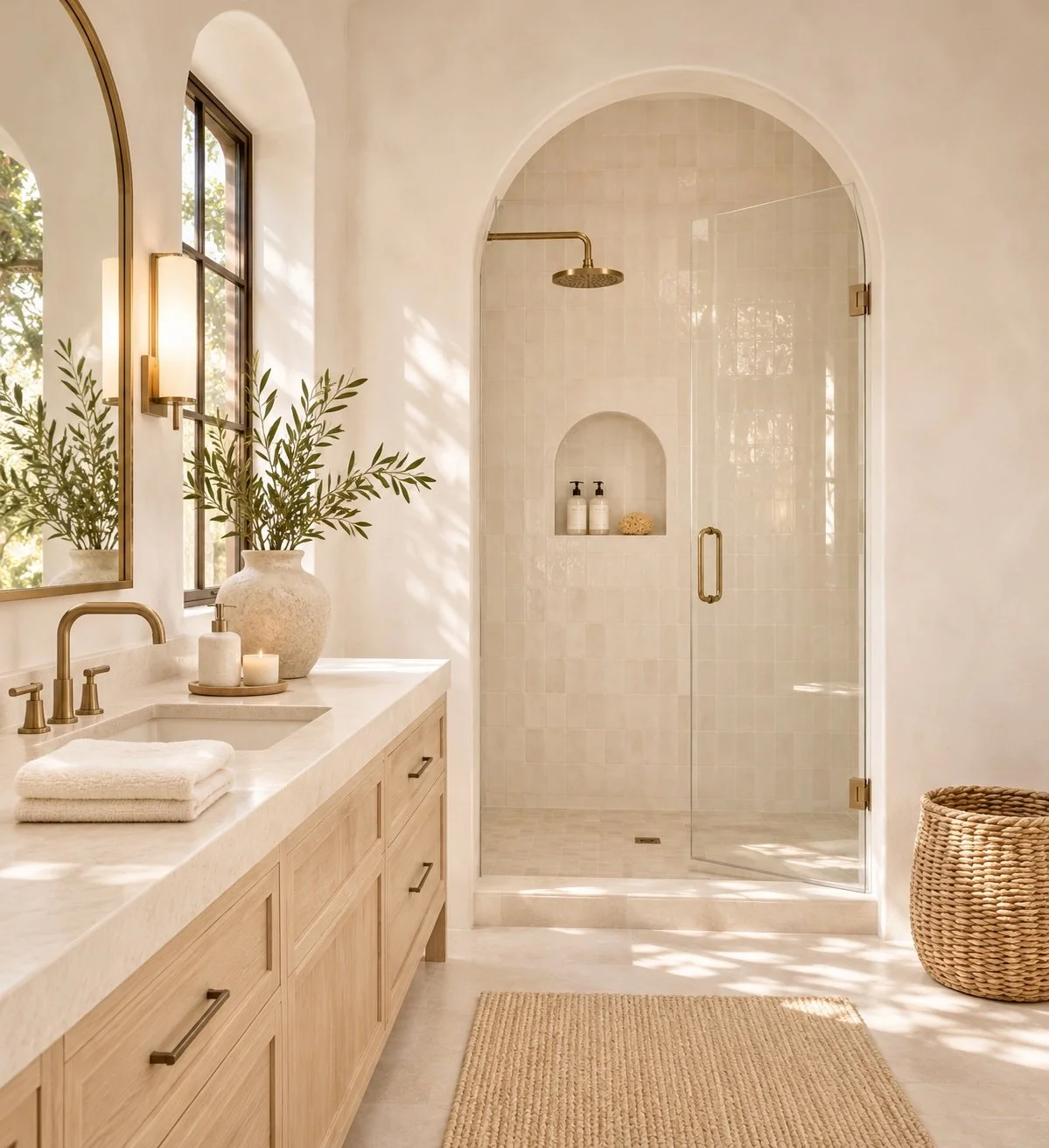
Perhaps the most recognizable architectural detail making its way into modern homes is the arch.
Long associated with Mediterranean, Spanish Colonial, and European architecture, arches are appearing in contemporary interiors in fresh and unexpected ways.
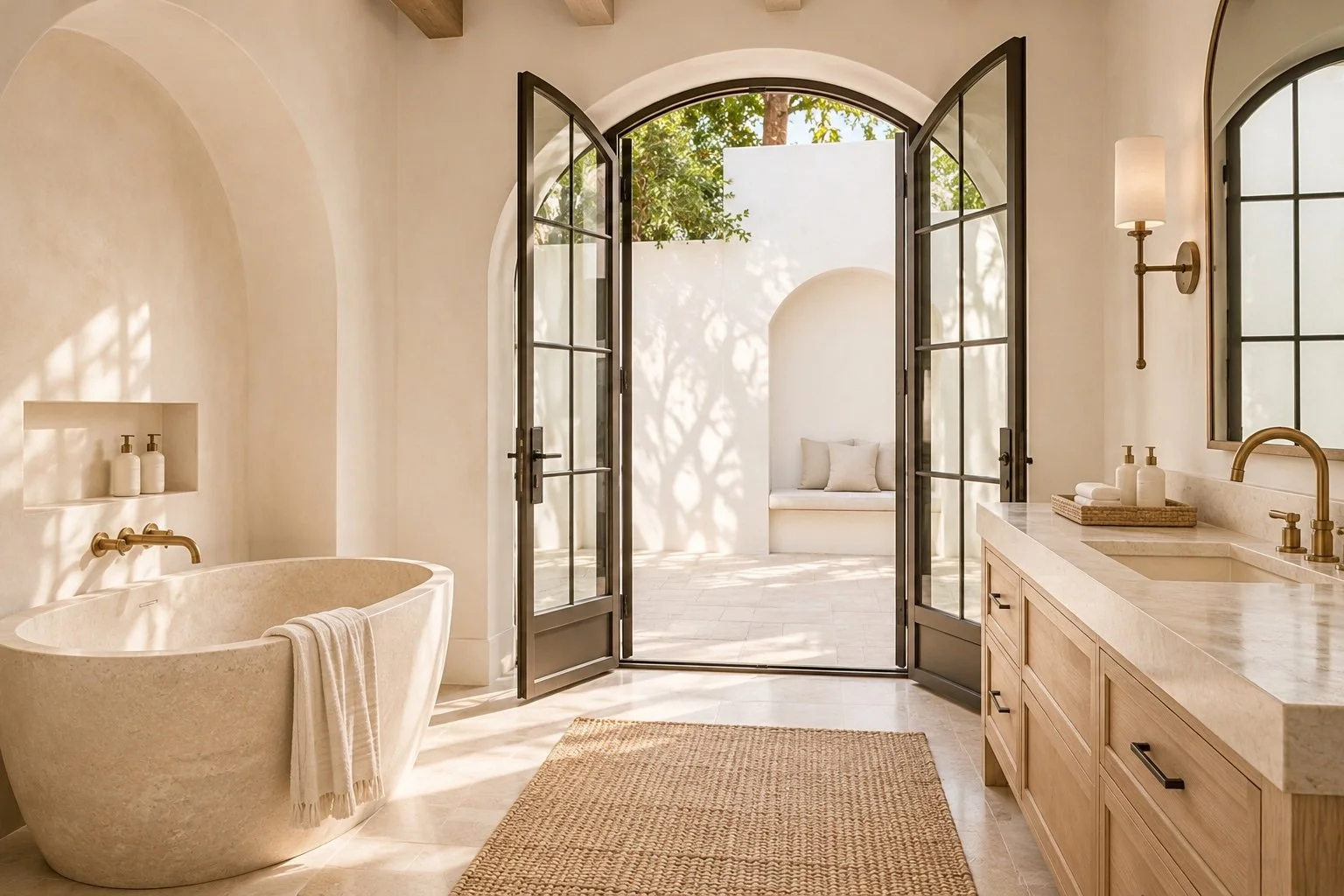
Arched doorways soften the transition between rooms. Curved shower entrances create sculptural focal points. Arched windows bring elegance to otherwise simple spaces, while recessed niches and cabinetry introduce subtle architectural interest.
What makes the modern interpretation different is restraint.
Rather than incorporating arches into every doorway or opening, designers are using them selectively, allowing a single architectural curve to become a defining feature.
The design takeaway: An arch should feel like a natural extension of the home's architecture, not an ornament added simply because it's fashionable.
A beautifully proportioned arched doorway can introduce character into a modern home without changing its overall aesthetic.
2. Natural Materials Are Replacing Perfect Finishes
One of the most appealing aspects of old-world architecture is its relationship with natural materials.
Limestone, travertine, plaster, white oak, and handmade tile bring subtle variation and texture to spaces that might otherwise feel overly polished.
In contemporary kitchens, we're seeing substantial stone islands paired with warm wood cabinetry, plaster range hoods, and softly textured backsplashes.
Bathrooms are embracing limestone floors, handmade ceramic tile, and warm, understated finishes.
These materials have an authenticity that manufactured perfection often lacks.
The slight variations in stone, the movement of plaster, and the irregular surfaces of handmade tile create depth without introducing visual clutter.
The design takeaway: Choose a limited palette of complementary materials and allow their natural textures to provide the interest.
3. Kitchens With Architectural Character
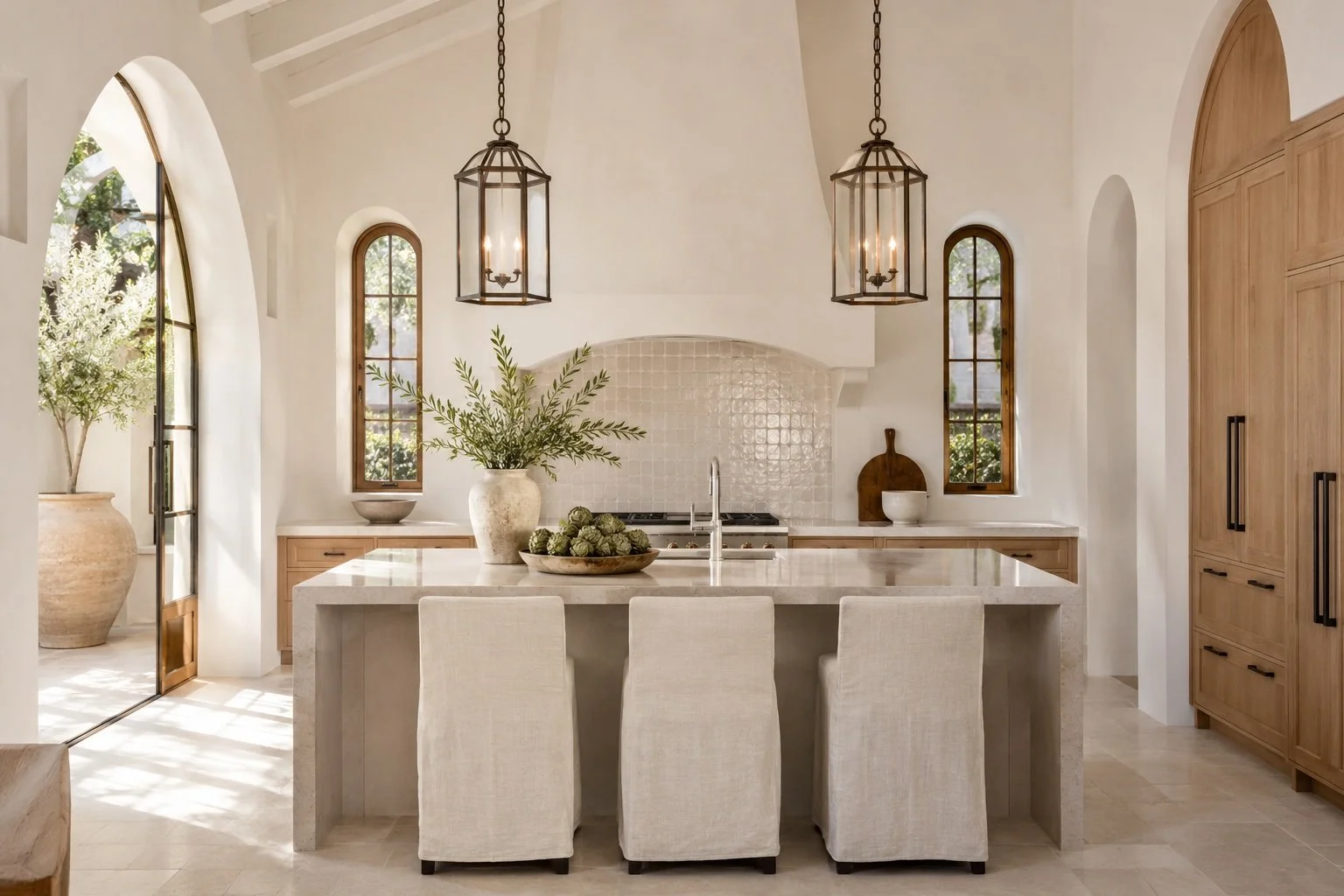
The kitchen has become one of the most interesting places to incorporate traditional architectural influences.
Instead of relying entirely on decorative cabinetry and finishes, architectural elements are becoming the focal point.
Consider a plaster range hood with a softly curved opening, tall arched windows framed in natural wood, or a substantial stone island with simple, sculptural lines.
Warm oak cabinetry provides contrast against whitewashed walls, while bronze or iron lighting introduces a subtle old-world influence.
The result feels elegant without being formal and sophisticated without being overly designed.
One of the most successful combinations is the contrast between traditional architectural forms and contemporary simplicity.
A curved plaster hood, for example, can become a statement feature when surrounded by clean cabinetry, minimal hardware, and understated stone surfaces.
4. Bathrooms With a Softer Architectural Approach
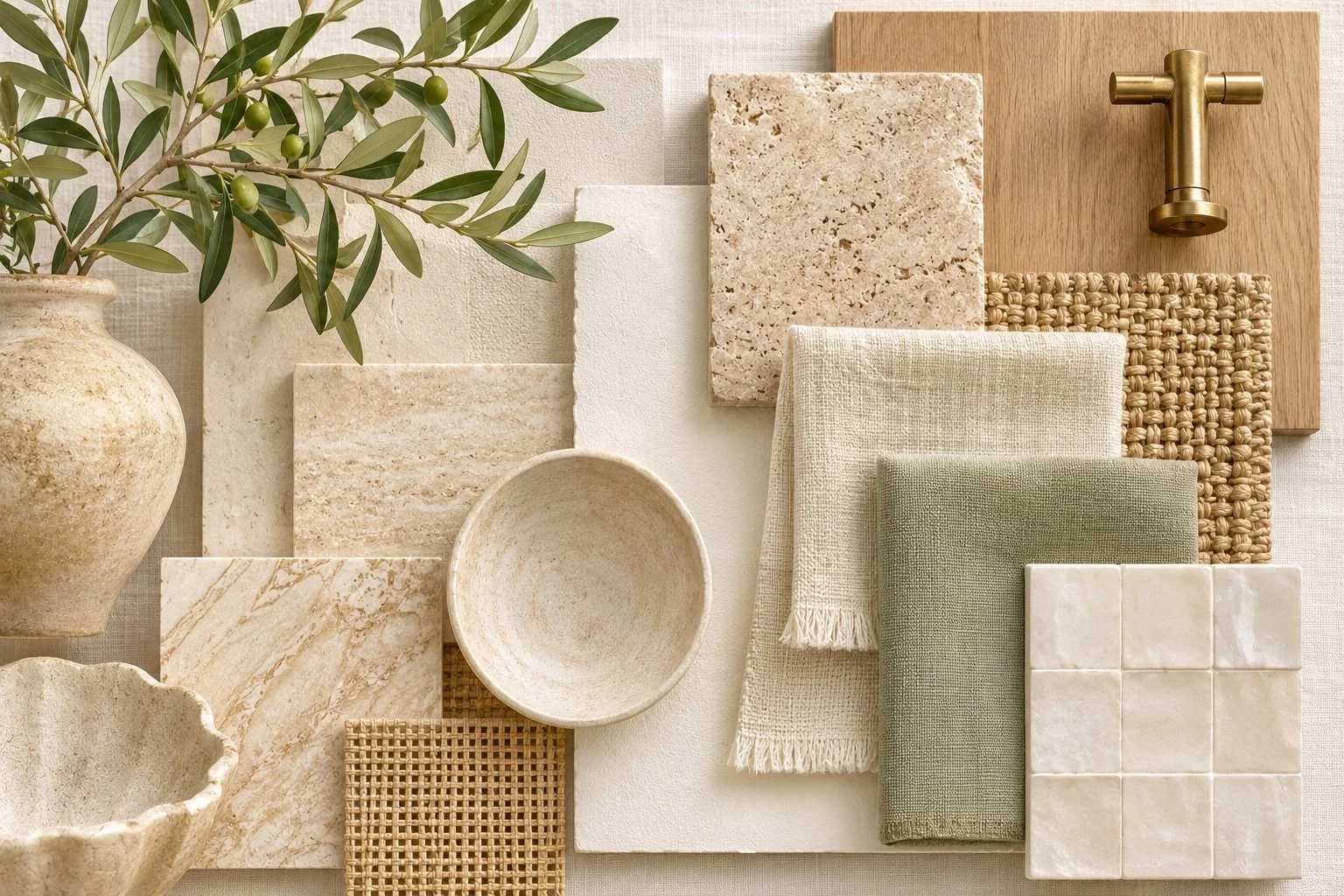
Bathrooms are another area where old-world details translate beautifully into contemporary design.
An enclosed shower with a single arched entrance can create a striking architectural feature while maintaining privacy and simplicity.
A glass door allows light to move through the space without interrupting the shape of the arch.
Inside, creamy handmade tile, natural stone flooring, and understated brass fixtures complement the sculptural opening.
Pair these details with whitewashed walls, pale oak cabinetry, and a simple stone countertop, and the result is a bathroom that feels both contemporary and timeless.
The key is allowing the architecture to lead.
Rather than introducing multiple decorative elements, one beautiful arch, a restrained material palette, and carefully selected fixtures can create a far more sophisticated result.
5. The Modern Dining Room: Simplicity With Substance
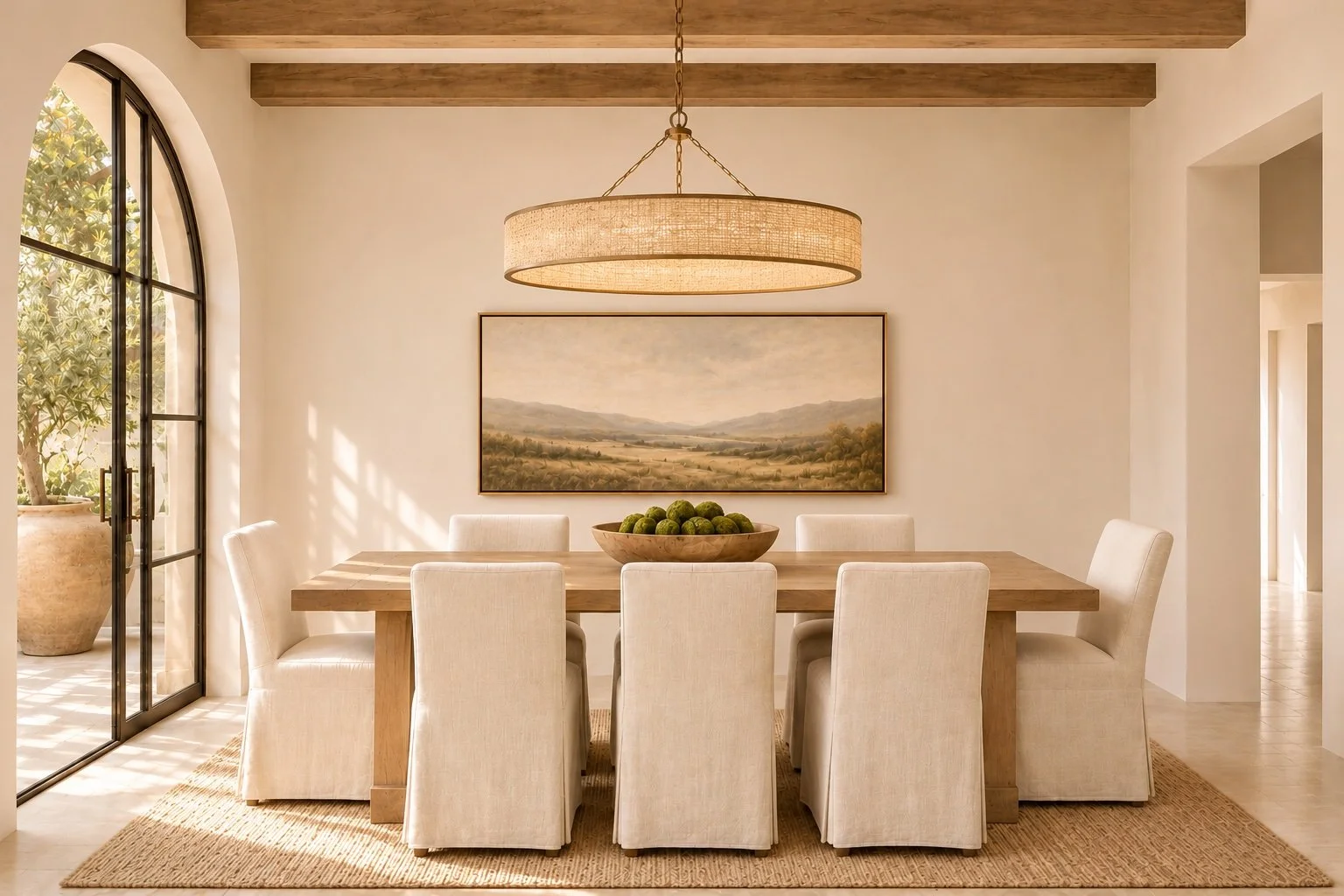
Architectural character doesn't have to mean elaborate millwork or decorative detailing.
Sometimes the most compelling rooms are the simplest.
A dining room with softly textured plaster walls, natural wood ceiling beams, and a single arched window can feel incredibly distinctive.
A substantial wood dining table introduces warmth and permanence, while upholstered linen chairs soften the room.
One oversized statement chandelier provides a contemporary focal point.
Artwork adds personality without competing with the architecture.
This balance between old-world materials and modern furnishings is what makes the style so versatile.
The design takeaway: Allow one or two architectural features to define the room, then complement them with simple, contemporary furnishings.
6. Courtyards: An Architectural Tradition Reimagined
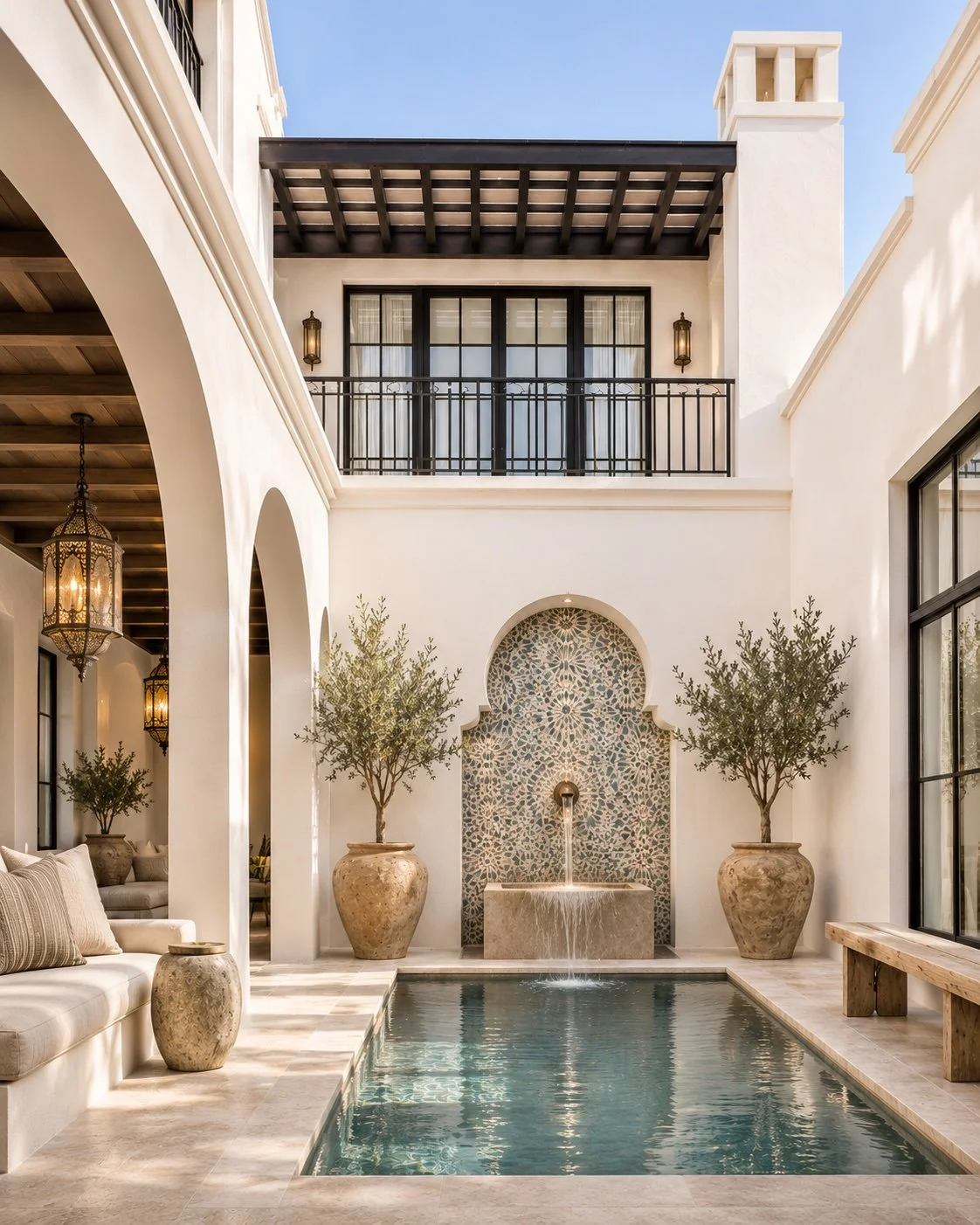
Courtyards have been central to residential architecture for centuries, particularly throughout Mediterranean and Middle Eastern regions.
Traditionally, they provided privacy, natural ventilation, and protected outdoor gathering spaces.
Today, the courtyard is being reinterpreted through contemporary architecture.
White plaster walls, limestone paving, simple water features, and carefully placed greenery create a sense of enclosure without feeling heavy.
Black-framed glass doors introduce a modern contrast, connecting interior rooms to outdoor spaces.
Alys Beach, Florida, offers a particularly beautiful example of this architectural language.
Its whitewashed buildings, intimate courtyards, and sculptural forms demonstrate how traditional influences can feel remarkably contemporary.
The appeal isn't necessarily the scale or grandeur of these spaces. It's the relationship between architecture, light, and natural materials.
Even a small courtyard can feel extraordinary when these elements are carefully considered.
7. Bringing Architectural Character Outdoors
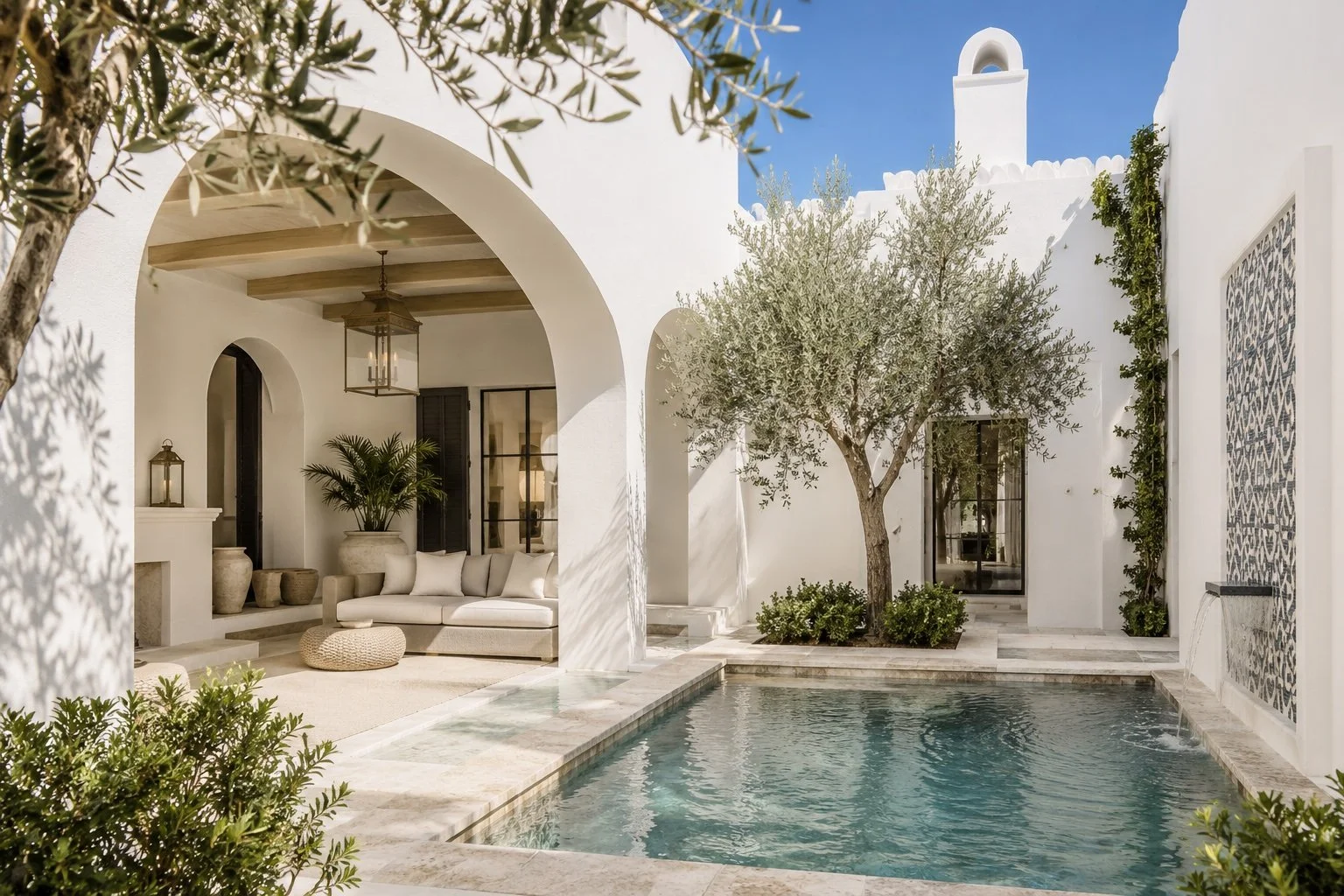
The same design principles can extend beyond the home's interior.
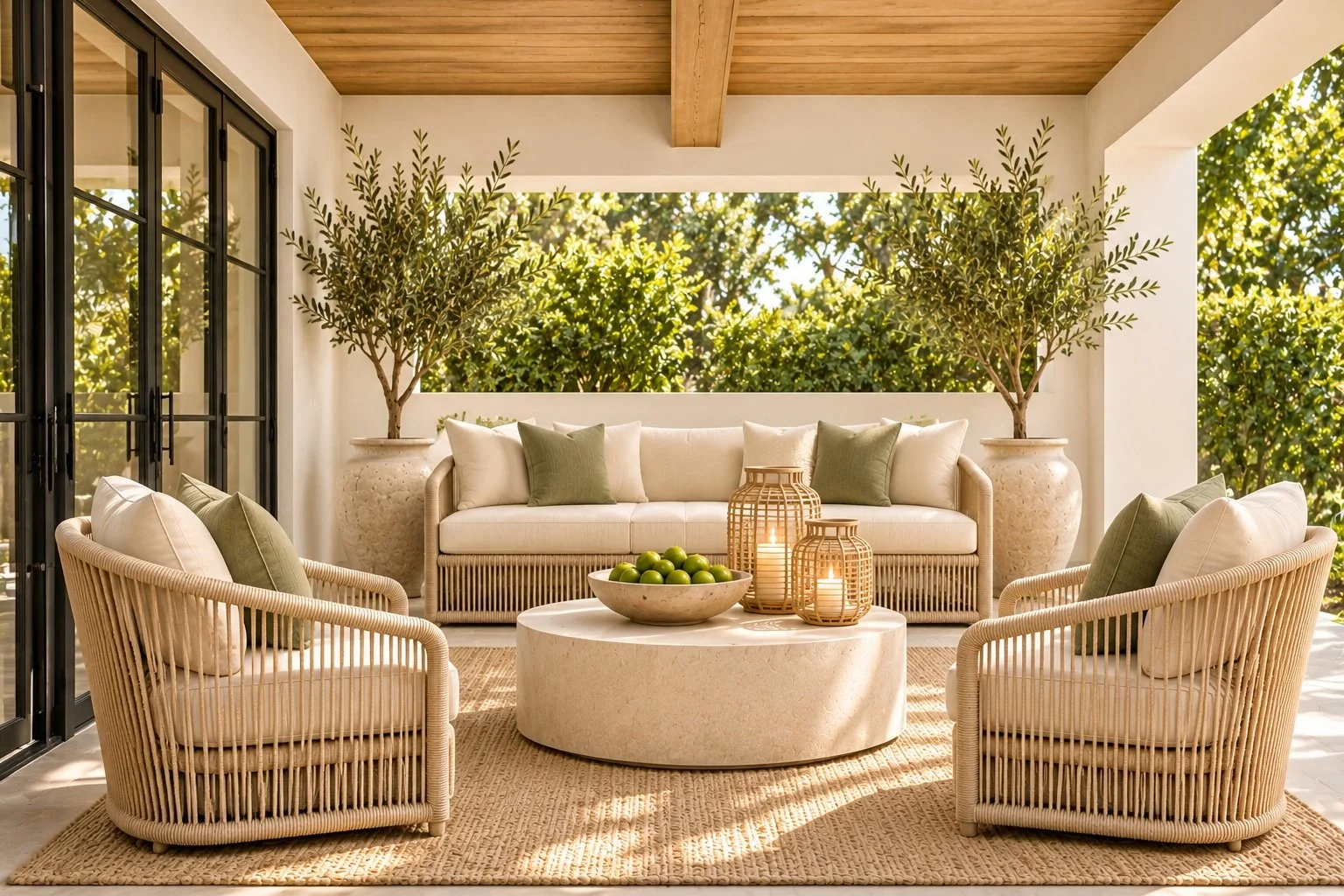
Covered patios and balconies are becoming architectural extensions of the rooms they connect to.
Whitewashed plaster walls, natural wood ceilings, stone flooring, and oversized openings establish continuity between inside and out.
Contemporary outdoor furniture keeps the look fresh.
A woven sofa with ivory cushions, coordinating lounge chairs, a limestone coffee table, and muted green accents create a relaxed but polished arrangement.
Large ceramic planters, olive trees, and simple accessories introduce natural texture.
A bowl of fresh limes or a pair of woven lanterns can provide just enough styling without overwhelming the space.
The most successful outdoor rooms feel connected to the architecture of the home rather than decorated as entirely separate spaces.
8. The Difference Between Timeless and Trendy
With arches and old-world architectural details gaining popularity, it's tempting to incorporate them everywhere.
But timeless design is rarely about using more of something.
It's about using the right elements in the right places.
A beautifully proportioned arch can enhance a contemporary home. Too many competing arches can make the same space feel overly themed.
Natural stone can introduce warmth and authenticity, while an excess of different textures can create visual confusion.
The goal is balance.
Before incorporating an architectural feature, consider the home's existing style, ceiling heights, proportions, and surrounding materials.
A modern home with strong linear architecture might benefit from one gently curved opening or a sculptural plaster fireplace.
A home with more traditional proportions may comfortably accommodate arched windows, exposed beams, or a courtyard-inspired outdoor space.
Architectural details should complement the home rather than compete with it.
9. Bringing Old-World Influence Into a Colorado Modern Home
One of the most interesting aspects of this design direction is how easily it translates across regions.
The same principles that make California coastal and Mediterranean architecture so appealing can be incorporated into Colorado homes.
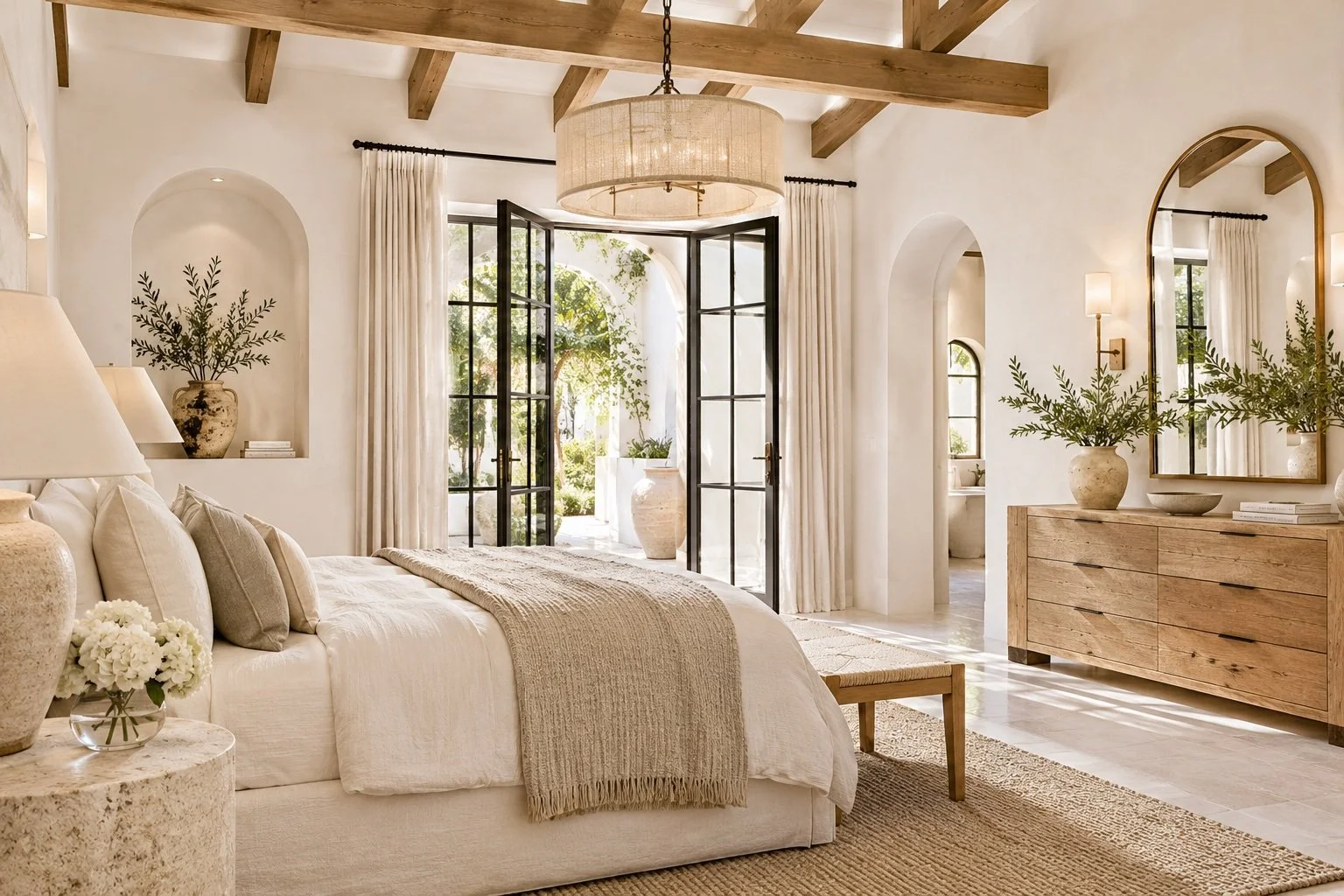
Warm wood beams, natural stone, textured plaster, and carefully placed architectural curves work beautifully alongside contemporary mountain architecture.
Instead of replicating a Mediterranean home, the goal is to borrow the elements that create warmth and character.
A limestone fireplace, pale oak cabinetry, a softly arched doorway, or an inviting covered patio can introduce these influences while respecting the home's surroundings.
It's this combination of architectural character and modern simplicity that makes the look so enduring.
A New Appreciation for Architectural Detail
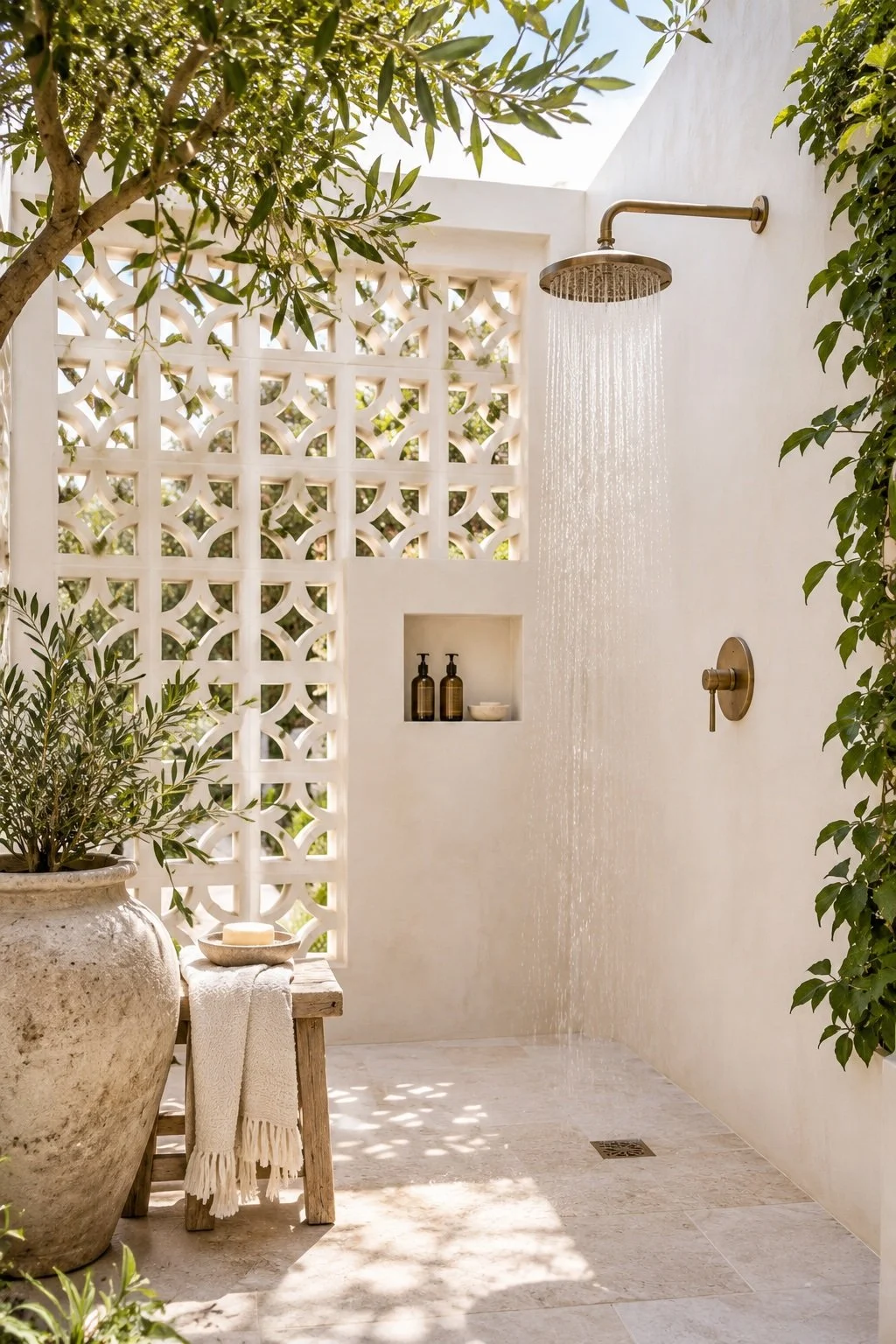
The renewed interest in arches, natural materials, and old-world influences reflects a broader appreciation for homes with individuality and architectural depth.
The most compelling contemporary interiors are not necessarily those with the newest finishes or most dramatic features.
They're the ones where materials, proportions, and architectural details work together effortlessly.
Whether it's a single arched doorway, a beautifully crafted plaster hood, or an outdoor room framed by natural stone, these elements introduce character that goes beyond a passing trend.
At JW Home + Design, we believe the most enduring interiors balance timeless influences with a fresh, modern perspective.
Because beautiful design isn't about recreating the past. It's about knowing which details deserve a place in the present.